Question Is the binary affine cube the only 3-connected matroid for which equality holds in the bound where is the circumference (i.e. largest circuit size) of ?
Problem Is there a problem that can be computed by a Turing machine in polynomial space and unbounded time but not in polynomial time? More formally, does P = PSPACE?
Problem Is there a minimum integer such that the vertices of any digraph with minimum outdegree can be partitioned into two classes so that the minimum outdegree of the subgraph induced by each class is at least ?
For and positive integers, the (mixed) van der Waerden number is the least positive integer such that every (red-blue)-coloring of admits either a -term red arithmetic progression or an -term blue arithmetic progression.
Conjecture If is a bridgelesscubic graph, then there exist 6 perfect matchings of with the property that every edge of is contained in exactly two of .
For a graph , let denote the cardinality of a maximum cycle packing (collection of vertex disjoint cycles) and let denote the cardinality of a minimum feedback vertex set (set of vertices so that is acyclic).
The crossing number of is the minimum number of crossings in all drawings of in the plane.
The -dimensional (hyper)cube is the graph whose vertices are all binary sequences of length , and two of the sequences are adjacent in if they differ in precisely one coordinate.
Conjecture For every , there exists an integer such that if is a digraph whose arcs are colored with colors, then has a set which is the union of stables sets so that every vertex has a monochromatic path to some vertex in .
Conjecture Suppose with is a connected cubic graph admitting a -edge coloring. Then there is an edge such that the cubic graph homeomorphic to has a -edge coloring.
Conjecture For , let be the statement that given any exact -coloring of the edges of a complete countably infinite graph (that is, a coloring with colors all of which must be used at least once), there exists an exactly -colored countably infinite complete subgraph. Then is true if and only if , , or .

 login/create account
 the only 3-connected matroid for which equality holds in the bound
  where
where  is the circumference (i.e. largest circuit size) of
  ?
?  be positive semidefinite, by Jensen's inequality, it is easy to see
 ![$ [tr(A^s+B^s)]^{\frac{1}{s}}\leq [tr(A^r+B^r)]^{\frac{1}{r}} $](/files/tex/f5fa90ccf8c1dde9b9bf1f21399b3b5428dab81d.png) , whenever
, whenever  .
. , is it still valid?
 such that the vertices of any digraph with minimum outdegree
  can be partitioned into two classes so that the minimum outdegree of the subgraph induced by each class is at least
  such that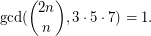
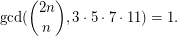
 -
- (mod
(mod  ) for every vertex
  .
.  is defined to be
  where
where  is the number of faces of
  .
. so that every convex 4-polytope has fatness at most
  we have
  . Then
  is graphic.
  is for every sets
  and
and  , there exists a Fibonacci number divisible by
  ,
,  does not divide
  where
where  is the Legendre symbol.
  and
and  positive integers, the (mixed) van der Waerden number
  is the least positive integer
 ![$ [1,n] $](/files/tex/661d0acc09fbc5b62f49645a71cf7d831a26563f.png) admits either a
admits either a  ,
,  .
.  is a
is a  of
of  -graph is an
  for every
  with odd size.
 for every
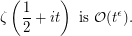
 can be replaced by a smaller value, we can also write the conjecture as, for any positive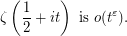
 has equivalence covering number
  .
.  denote the cardinality of a maximum cycle packing (collection of vertex disjoint cycles) and let
  denote the cardinality of a minimum feedback vertex set (set of vertices
  so that
  is acyclic).
  .
.  of
of  is the graph whose vertices are all binary sequences of length
 such that if
  is a digraph whose arcs are colored with
  set which is the union of
  which cannot be expressed as a union of
  triangle free graphs?
  so that all pairwise distances between points in
  is a connected cubic graph admitting a
  -edge coloring. Then there is an edge
  such that the cubic graph homeomorphic to
  has a
has a ![$ p \in [0,1] $](/files/tex/1d076f7332523eb59bd7deae19667f83f0a3b6e0.png) , we let
, we let  denote a subgraph of
  ?
?  contains every 2-regular graph on
  vertices as a minor.
 is at most
  .
.
 .
.  , let
, let  be the statement that given any exact
  -coloring of the edges of a complete countably infinite graph (that is, a coloring with
  -colored countably infinite complete subgraph. Then
  ,
,  , or
, or  .
. Drupal
 CSI of Charles University